Guerrilla commentary

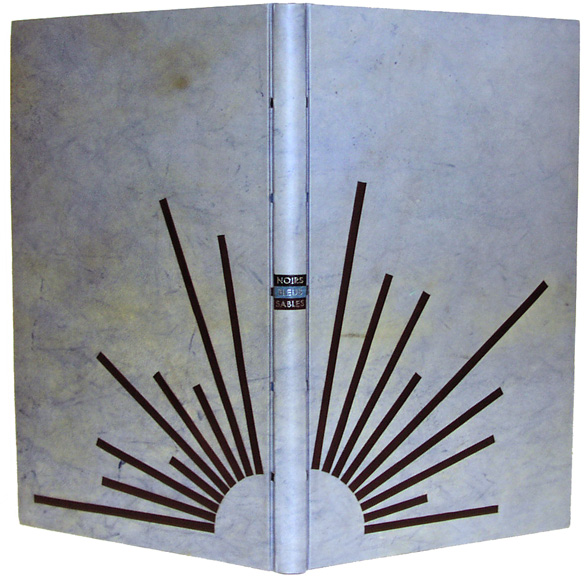
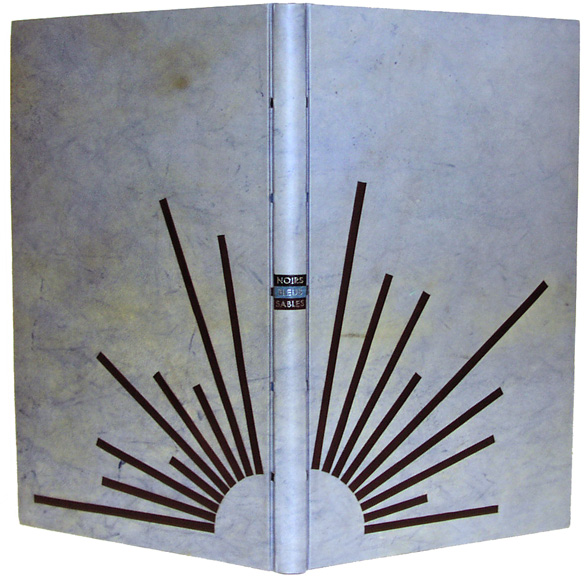
I did some work at a coffee shop the other day, and this marked-up newspaper ad was laid on a counter directly across from the station where you pick up your order, clearly meant to catch the attention of passers-by:
Click either image to make it larger if you can’t read the handwriting.I sense a little Guerrilla Girl action in the capital city.

What images in your local landscape would you like to rearrange?

A poignant, uncomfortable prayer

This opening prayer for the inaugural festivities, given by Episcopal Bishop Gene Robinson, was left out of the broadcast yesterday, apparently due to a miscommunication between Obama’s planning committee and HBO. To make up for the mistake, it will be rebroadcast before tomorrow’s ceremonies (at least for the couple million people who are at the event).

In case they don’t share it on the networks tomorrow or you miss it, here’s the YouTube version. It’s a sobering, poignant and uncomfortable prayer:

[youtube=http://www.youtube.com/watch?v=kWWAnitUCw4]

And here’s something precious to think about on this National Day of Service: 30 Things I Believe by a little boy named Tarak McLain who has already become quite a community activist at age seven. I recommend listening to the brief broadcast so you can hear his voice.

I hope you’ve had a wonderful Martin Luther King Day. Here’s a look back at a little mural in an urban Columbus neighborhood that shines a little light on the hopes that Dr. King and our new President have inspired.

Aspiration: Read more, read well

I produce and ingest hearty portions of all of the major Internet food groups daily: tweets, shared items and updates on Facebook, a wide variety of blogs and news aggregators. From any of those starting points, the web can go on and on and on. Sometimes that leads to the sublime or the merely entertaining, but sometimes it gives me the same feeling I invariably get if I dare to visit the snack counter at the movie theater. When there’s too much junk in what I read, I see it in what I write, and how I feel – sort of intellectually bloated and greasy, with way more butter than I was expecting.

One of the easiest tasks I’ve assigned myself on the quest for imperfection in 2009 is to walk away from the chutes and ladders of the web and over to a chair and ottoman that I’ve cleared off for myself, where I can read actual books with pages and ink beneath the glow of a warmly shaded lamp. And especially books that aren’t carved into multiple essays, which have been the ones I’ve had the most hope of finishing in the last year or two. I can be enormously popular in my house, thereby often unable to complete my own sentences, let alone read anyone else’s.

So I’m trying to find things that are nourishing – not necessarily new or topical or even about things that I’m interested in. What I want to read is good writing that glides and bounces and pivots and moves. If the most lyrical book that I can find is about slime mold, then I will read about slime mold.

I’ve started with Elizabeth Gilbert’s Eat, Pray, Love, which is open and friendly and airy, and has been a nice transition from erratic essay reading, since she’s written it as though it was a string of prayer beads from a Meditation Mala. And it’s about a woman in her 30s on a quest for self-discovery, therefore not really remote to me (like slime mold) at all.

But I have a stack of three books that have been nagging me to read them for years – books that I couldn’t bring myself to look at as a pregnant woman or a new mom. I already felt vulnerable in a way that made me cry at insurance commercials and unable to read too far beyond headlines for a long time after the 2004 election. I didn’t want cynicism or anger or fear in the placenta or the breast milk, so I went cold turkey on my news junkie ways. I turned away from violent movies and shows and stories. Sad ones too.

Besides, I worked as an observer in a couple of the district’s poorest urban high schools during these years. My child was nearly lead poisoned. My very kind and loving dog went through miserable pain with bone cancer before we had to make the awful decision to let him go. My husband lost his business of 20 years to little more than greed. There has been plenty of death and illness in our family, and a few deaths among friends, particularly those who couldn’t beat the demons of substance abuse. So… reading tales of loss and tragedy hasn’t seemed like it would be particularly appealing or cathartic or helpful, no matter how compelling the narrative.

But now my boy is a preschooler and we know how much of nothing and everything that we are in the face of the universe. And we have a new president coming in who wants to steer us away from oblivion instead of into it headlong. And so I can be brave again in the face of literature, particularly the non-fiction variety that I tend to prefer.

I can read By Her Own Hand by Signe Hammer – the memoir of a woman whose mother inexplicably killed herself. I read an excerpt of the book a few years back and the imagery and rhythm of the prose startled me – not in its pain, but its buoyant childhood images. And I can read Newjack by Ted Conover, who worked undercover as a prison guard at Sing Sing for a year, and whose New Yorker essay “Trucking through the AIDS belt” has been haunting me for years, because of one person he drew vividly in that story, and the choppy rhythm of those African roads.

And then, most frighteningly, I may read The Disappearance: A Primer of Loss, by Genevieve Jurgensen, who had two daughters that were killed instantly in a car accident in 1980. I heard her read an excerpt from the book on public radio (maybe on This American Life?) soon after becoming a mother myself and I nearly threw up, so I think I need to read it.

I’m also piecing through Mark Bittman’s Food Matters because I read that it was the most practical book about environmentally conscious food buying and preparation out there. And I plan to read a few of the stories in the traditional Blue Fairy Book to remind myself what fairy tales were to me as a girl, because they didn’t always have happy endings or clear-cut heroes and villains. I may reread A Wrinkle in Time because it’s been 25-30 years since the last time and I don’t remember it so well. And chances are good that I’ll use one of my next coupons on one of James Morrow’s book, because I love me some complicated religious science fiction/humor.

And so, if, by any chance, you’ve made it all the way through this long-winded post, tell me: What book(s) have you read, whether it was last week or twenty years ago, that had a profound influence on your sense of language? If you had to pick a couple of the books that most made you want to write (or to read more), what would they be? Have you ever met a book with a subject that you thought would bore you, but instead, it ended up making you turn off your phone so that you could read it in peace?

Sappy post #1 for 2009

Declan has a friend – a little girl who he’s friends with largely because we are friends with her parents. She was born about three months after he was, and they played side-by-side before they played together. Now that he’s been able to make new friends of his own choosing, I’ve wondered how they’ll continue to get along.

We haven’t seen as much of their family in recent months, we’ve been busy, and they’ve been getting acclimated to life with a three-year-old and a new baby boy. But they came over on Sunday for a visit, and it was the first time Declan and his friend played mostly without supervision.

They were frantically making things up in the kitchen and periodically emerging to present odd toys and bits in bowls to us as “cupcakes.” At one point, Dec shrieked “MOMMY!” from the playroom and I ran to see what damage control I needed to do. The infraction was this:

“S___ made me some coffee and it’s TOO HOT!”

“Maybe you should blow on it to cool it down,” I offered.

“Okay.”

He also got a little sad when she didn’t want to sit down and hold his hand and watch a documentary about the 95+ moons in our solar system. Then there was a brief skirmish over the toy vacuum cleaner, but the visit was mostly sweet and easy.

S__ currently has the “Why?” affliction in spades. I don’t think she responded to me once during the entire visit with anything other than that question, which I answered nearly every time, although I’m not sure she cared to hear the answer. Last night, Declan was telling his daddy about her visit.

“I told her I loved her,” he offered. Then, not surprisingly: “She asked me why.”

His answer?

“I told her it was because I love her heart.”

Imperfectionism

As I was cleaning on New Year’s Day, an old cookie fortune flittered out of a pile of papers onto the floor. “You’re a perfectionist,” it said, in deceptively friendly typeface. “Don’t spoil it.” I think I saved it because it is obviously the most annoying fortune ever.

If you looked at my house, my car, my fingernails, my life – “perfectionist” is probably one of the last things that would come to mind. Unless, maybe, you know something about perfectionism.

In action, perfectionism doesn’t really look like “a place for everything and everything in its place,” although I suppose that it might for some people. It has more to do with deluding yourself that it’s possible for everything in life to be perfect — you, your environment, your career, your relationships — and punishing yourself or paralyzing yourself when it isn’t.

In my life, this has manifested in simple ways, like letting my desk or the kitchen sink or a room go to mayhem before I put them back in order, because I won’t do anything until I think I have set aside enough time to do everything. (Thich Nhat Hanh’s Miracle of Mindfulness, motherhood and the Flylady* have helped bring me miles past where I used to be on this.) Or sadder ways – I don’t want to go out as often, because I’m not the skinny minnie I once was or because I think people won’t accept me because I talk and think too much about being a mommy. Or I don’t invite people over unless I know their perception of “disaster area” is similar to my own. Or worse.

Writing has always been a space where I’ve felt willing and able to do battle with perfectionism. And I think that it is one place where I’ve managed to whip it more often than it’s whipped me. About a year ago, a friend joked and called me “the great, glorious she-hack” while we were talking, then immediately worried that he might have offended me. Maybe it was because we were in the basement of a Buddhist temple at the time (where ego is often more in check), but I felt, and assured him, that I wasn’t. “I think I might put that on my business card,” I joked.

I think I’ve learned to rein it into something useful in writing and research – a sort of meticulousness or attention to detail that I usually give to the story first and the writing second. Mistakes happen, you cop to them and you write again. But that has been a long, weird and sometimes painful process. I’ve had editors change things for seemingly no other reason than to have done something. I’ve had copy editors edit mistakes into my work and survived the embarrassment.** And I’ve lived with the demands of writing for the space allotted, not necessarily to the story, for much of my career.

If I let perfectionism control my writing, I would never have been able to make a dime doing it without tearing all of my hair out. I would have had to go into academic writing, where there is more editorial control, or become a weekend novelist who made her money in landscaping or as a circus clown. Instead, I have become the “great glorious she-hack.” It’s not on my business card, but it is one of the titles I give myself on my rotating email signatures. If I could make my expectations of life more like my expectations of writing, I think I’d be a healthier person.

My spider senses are up about this because I’m beginning to see signs of perfectionism in my son. Many skills come to him easily, and some of the ones that don’t can give him emotional vertigo. Before the holiday, one of his teachers told me that perfectionism is common in oldest (check!) or only children, who often compare themselves more to adults than to other children. And the two things she told me I could do to help him were to praise the process when he worked hard on learning something and to model failure for him.

As grating as that cookie fortune was, it was fortuitous that it fell down n front of me on the one day when I’m usually consumed by contemplating resolutions and consuming good luck food. And this year, I was feeling like a failure because I was in a terrible, fatigued mental space that did not lend itself well to reflection.

It helped me resolve to not have resolutions this year, because the very nature of resolutions predisposes me to failing – or not accomplishing as much as I would like to – in an ungraceful or unforgiving way. Aspirations, on the other hand, are less quantifiable and forgiving. I can advance a psychic millimeter or a light year – all that matters is that I advance. Or move on if I do not or cannot, because that would be an advancement too.

And so I am figuring out a few aspirations for myself, some of which I will share here in the next few days, or weeks, or seasons. Feel free to join me if you’re so inclined. I’d love for us to help each other to not be so hard on ourselves.

——–
* The Flylady’s prose is a more than a touch precious, but her ideas about managing domestic life in the face of perfectionism are sound. My Christmas tree hasn’t come down yet, but my sink is very shiny. I currently like being in 75 percent of my house, and that’s not so bad.

** Note to editors I work with who read this blog: These things have not happened with anyone I’m currently writing for. Seriously.
The universe doesn’t revolve around you

399 years ago today, Galileo Galilei was looking through his telescope when he took note of two starry objects next to Jupiter. The next night, he noticed that they moved strangely, so he kept his lens trained on the giant planet for several days. He saw that there were actually four of these bodies in motion, and came to the realization that they were orbiting around Jupiter.

This was humanity’s most compelling evidence that Copernicus was right. Jupiter does not revolve around us. The sun does not revolve around us. The universe does not revolve around us. I’m not sure that we’re grounded in these facts yet, nearly 400 years later.

You can’t mark this occasion by looking at Jupiter tonight, unless you live on the other side of the sun. But the moon will be crossing the Pleiades at sunset, which, my son informed me last night, is my “favorite cluster.” Then he had plastic mommy drive plastic him in a plastic car to “the observatory” to look through telescopes.

The Galilean moons of Jupiter (pictured): Io, Europa, Ganymede, Callisto.

P.S. These moons are not finished messing with our overdeveloped sense of importance yet. There is evidence of saltwater on three of them, and of large oceans on Europa. That could mean life off of our planet in our own solar system. Read more.

There’s a mouse on my windshield, what am I gonna do?

I was stopped at a red light on the way home from an evening appointment last night when I saw something moving near the windshield wipers on the outside of the car. I had been parked in the Short North, so I tried to focus on it in the dark, expecting it to be a flier for a night club or some art event flickering in the breeze. Instead, it kept moving up, up, up… until it was in the dead center of my windshield, where I could clearly recognize its form as definitively mouse-like.

I, of course, shrieked like a seven-year-old as the critter made a panicked circle before descending back under the hood. I made a meek attempt to draw it back out by turning on the wipers, and when it didn’t, worried that I had driven it deeper into the bowels of the car. I then drove the next mile or so in my own panic, a phantom mouse scaling my right leg over and over until I could get up the road where it was well lit and safe to stop.

I popped the hood, and saw that there was a little evidence that the mouse was trying to make a nest in the well of the windshield, but there was no mouse to be seen. I called Dan, whose suggestions included: “Um, maybe turn up the heat?” “Get an umbrella to swat it away with” and the extra reasonable: “If it does somehow end up inside of the car, pull over so you don’t freak out and kill yourself.” Then I tried to convince myself, and him, that it must have fallen out of the bottom of the car before I got in to make the rest of the trip home.

A few minutes later, on a stretch of road where the speed limit was about 40 mph, the mouse reemerged and crawled across the outside windshield right at eye-level in front of me, clinging to the glass in the face of high freezing wind like Indiana Jones. It made it all the way to the edge, where I’m not sure if it took a flying leap or managed to find another way to hang on, perhaps in my door. Mice have such bizarre contortionist abilities, who knows? I climbed out the passenger door when I got home so that I wouldn’t find out, because as much tougher as I think motherhood has made me, I’m apparently a freaky coward unless I’m actually protecting my son.

Our garage is a separate structure from our house, where any mouse who has dared cross the threshold has been made into mincemeat by the cat in a matter of hours. I considered letting him pay a visit to the garage, but its too cold. Google searches for “mouse in car,” “mouse in engine” and “mouse on windshield,” were mostly useless, except to make me worry that a family of critters might now live in my engine, where they are happily gnawing away at all of my electric wires and my air filter.

The one potentially useful suggestion I found said that mice steer clear of peppermint essential oil. All we had on hand was some Dr. Bronner’s peppermint castille soap, which has been liberally applied to various parts of my car, inside and out. I’d like to see this experiment increase the product’s uses to 19-in-one: shampoo your hair, clean your dentures, rid your car of mice, etc.

Today’s ride to preschool should be… bracing.

Stalled

So there are now at least three blog posts that I’ve started and left unfinished, because they were either too sensitive or too boring for me to hit publish.

Thankfully, Dec’s back to preschool this week, I’ll be doing some work outside of the house and Barack Obama is in Washington. Ground will be broken on a spaceport soon. Library books are due.

Happy Monday.

Santa fraud

I’ve been kind of surprised by the number of anti-Santa parents I’ve met of late. Or those who will only tell the tale pragmatically, as in, “Santa lived once and was generous and gave gifts to all the children, and now we do the same thing in that spirit.”

More than a few people I’ve spoken with were traumatized by the means that, as children, they were disillusioned of Santa Claus. Being teased out of the fantasy on the playground or school bus made them feel that their parents had lied to them, that they were duped by the world. (My husband is one of those people.)

“I can’t lie to my child, no way,” one mom told me recently.

Personally, I never fully stopped believing in Santa Claus. I can’t swear to him, either, but I met plenty of Santa haters (especially older kids who seemed to take joy in dispelling the story) that gleefully tried to humiliate my faith, and it left no bruises on me.

I think believing in the impossible, or the improbable, is especially good for a science-enamored kid like mine. It’s one thing for him to learn to suspend disbelief at the movie theater, another thing entirely to do that with his own life. I don’t know where the world’s scientific developments would be without the capacity to imagine, desire, fear or believe in things that seem just too crazy to be real.

Smooching infinity since 2005.